Sugar, in plain words · 2 min read · Seedling days
How much sugar is OK for a two year old?
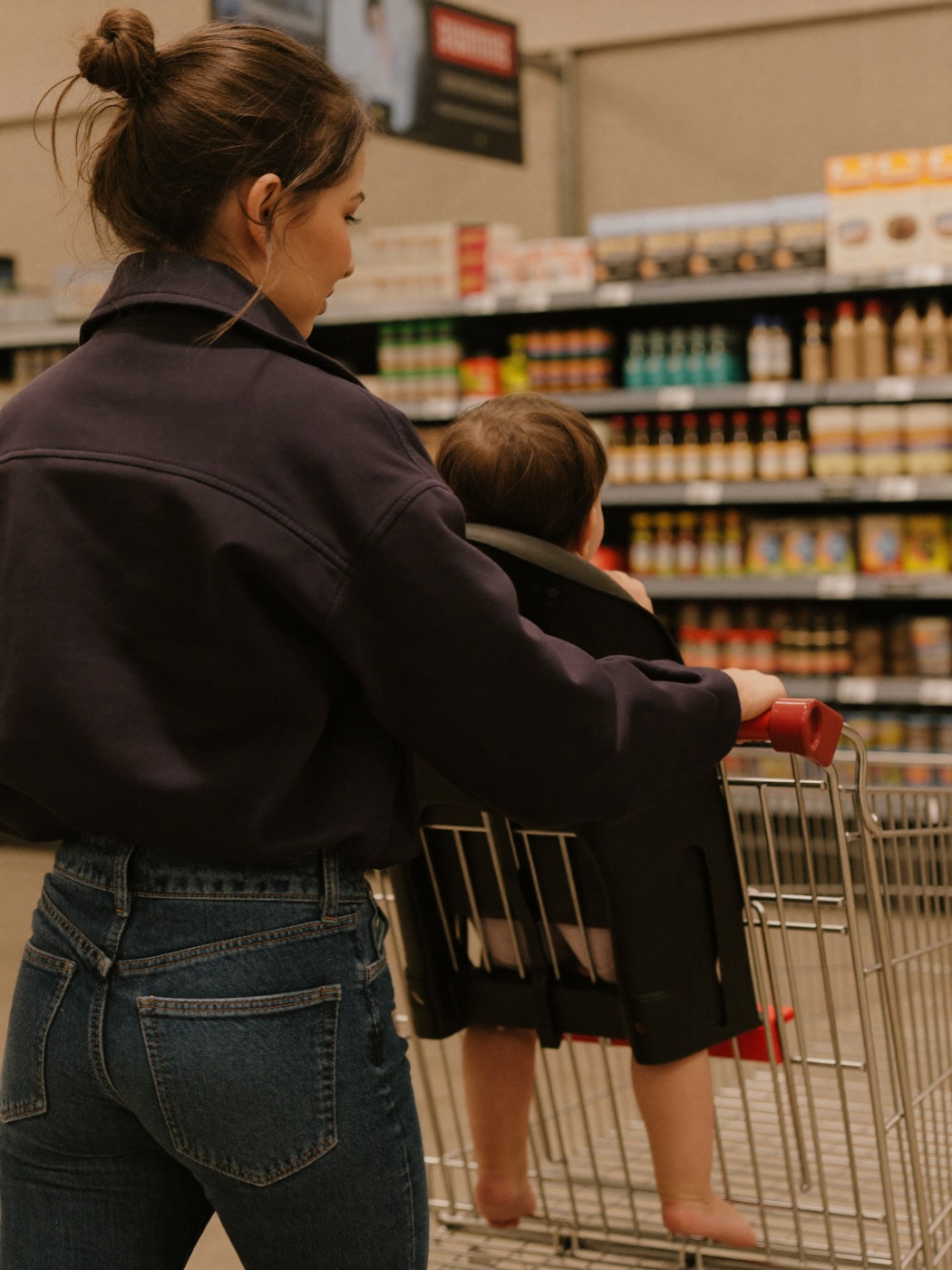
Less than most Australian toddlers currently get. The WHO sets a strict ideal for free sugars at this age, yet 71.1% of Australian 2-year-olds exceed the WHO free-sugar limit, and 38.4% exceed even the lenient ceiling of 10% of daily energy (SMILE cohort, Nutrients, 2019). The gap mostly comes from the trolley, not the birthday cake.
of Australian 2-year-olds exceed the WHO free-sugar limit
SMILE cohort, Nutrients, 2019
What are free sugars, and what are not?
Free sugars are added sugars plus the sugars released when fruit is puréed, juiced or concentrated. Whole fruit is not a free sugar; neither are the natural milk sugars in plain yoghurt or cheese. The line matters because it splits the fruit bowl from the fruit pouch, and the panel on the pack does not draw it for you.
Where does a toddler’s sugar actually come from?
Everyday packaged food more than treats. Discretionary food supplies around 12% of Australian toddlers’ daily energy, and 89% of toddlers eat some despite guidelines allowing none at this age (OzFITS 2021). Add the pouch shelf, where 72.8% of Australian baby food pouches contain free sugars (Brunacci, 2023), and the pattern is set before the lolly aisle.
This is genuinely good news. The birthday party is not the battleground. The weekly shop is, and the weekly shop is the one place you fully control.
Do I need to count grams?
No. Counting grams at the table is a job nobody keeps up. The habit that works is comparative and takes ten seconds at the shelf: within any category, read total sugar per 100 grams and lean towards the plainer end. Every 4 grams per 100 grams is roughly a teaspoon per 100 grams of food.
Is fruit OK, then?
Yes, wholeheartedly, in its whole form. A banana arrives with fibre, chewing and a stopping point; its sugars are not free sugars. The same banana blended into a pouch behaves differently: faster, sweeter, easier to finish, and counted as free sugars in the Australian research (Brunacci, 2023). The fruit is fine. The format is the question.
The gap is mostly the trolley, not the birthday cake.
Free sugar or not, at a glance
| In the trolley | Free sugar? |
|---|---|
| Whole banana, apple, berries | No |
| Natural milk sugars in plain yoghurt or cheese | No |
| Fruit purée or concentrate in a pouch | Yes, per the Australian research |
| Fruit juice, even 100% juice | Yes |
| Rice malt syrup, and any ingredient ending in -ose | Yes |
Common questions
What does 10% of daily energy mean in food terms?
It is the lenient WHO ceiling that 38.4% of Australian 2-year-olds still exceed (SMILE cohort, 2019). You do not need to compute it; the per-100-gram comparison habit keeps a trolley under it without maths.
Is "no added sugar" on the pack good enough?
It is a start, not an answer. Fruit purées and concentrates can still make a product sweet, and they count as free sugars. The per-100-gram sugar line tells you what the badge does not.
My toddler already loves sweet things. Too late?
Not remotely. Tastes keep training in both directions, and acceptance of plainer foods follows the same 8-to-10-plus exposure process as any new food (USDA, 2020). The trolley resets every week.
Should I cut sugar out completely?
The goal is a default, not a purity test. Shift the everyday items to the plainer end of each shelf and let occasions be occasions. A calm pattern beats a perfect week.
The research
Every figure in this article comes from one of these sources. Read them; that is what they are for.
- Brunacci K. et al., The big squeeze: a product content and labelling analysis of infant food pouches in Australia, BMC Public Health, 2023 doi.org
- Moumin N. et al., The Australian Feeding Infants and Toddlers Study (OzFITS 2021), Nutrients, 2022 pmc.ncbi.nlm.nih.gov
- Devenish G. et al., Free sugars intake among Australian 2-year-olds in the SMILE cohort, Nutrients, 2019 doi.org
- USDA and HHS, Repeated exposure to foods and early food acceptance: a systematic review, Nutrition Evidence Systematic Review, 2020 ncbi.nlm.nih.gov